“As educators we help students find connections, deepen their understanding so they can express themselves with confidence and build their identity in this world.”
Angela Mira Oh
WORK WITH Angela
Examples of my Teaching Performance Expectations
Learn a little bit about me & my background
View & upload my resume & cover letter here

“Breaking stereotypes and glass ceilings”
Resume
SPED Instructional AIDE
Westpark Elementary, IUSD current
Provided one-on-one instructional support to promote academic progress and assimilation in the classroom
Implemented accommodations and modifications outlined in the student’s IEP under the guidance of the special education teacher.
Assisted the student with classroom tasks, adaptive materials, and technology
Facilitated participation in whole-group and small-group instruction to encourage inclusion and peer interaction
Substitute Teacher
ECLC, Alderwood Elementary & Westpark Elementary, IUSD (2025)
Delivered standards-aligned instruction across 1st through 5th grade levels
Adapted lesson plans and differentiated instruction to support diverse learners, including English Learners and students with IEPs.
Established positive classroom environments through proactive behavior management and asset based approach
Long-Term 5th Grade substitute teacher: taught core subjects and built positive connections with students
Full-time Student Teacher
Westpark Elementary, IUSD (July - December 2025)
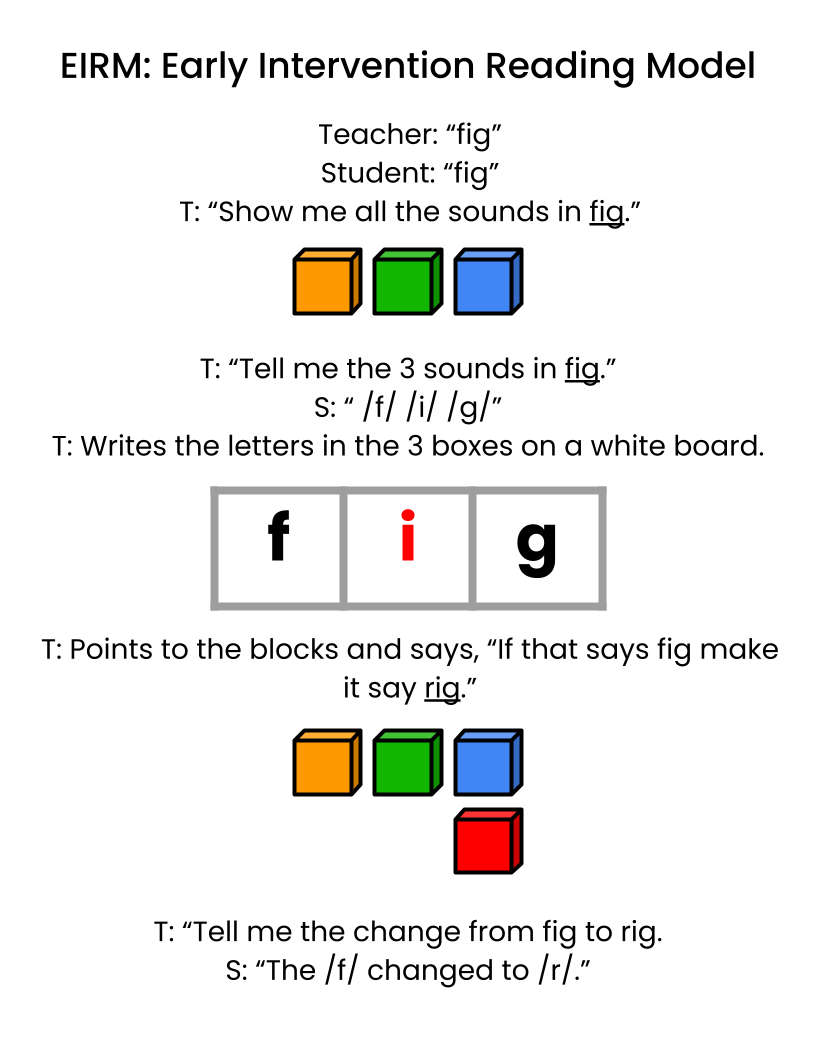
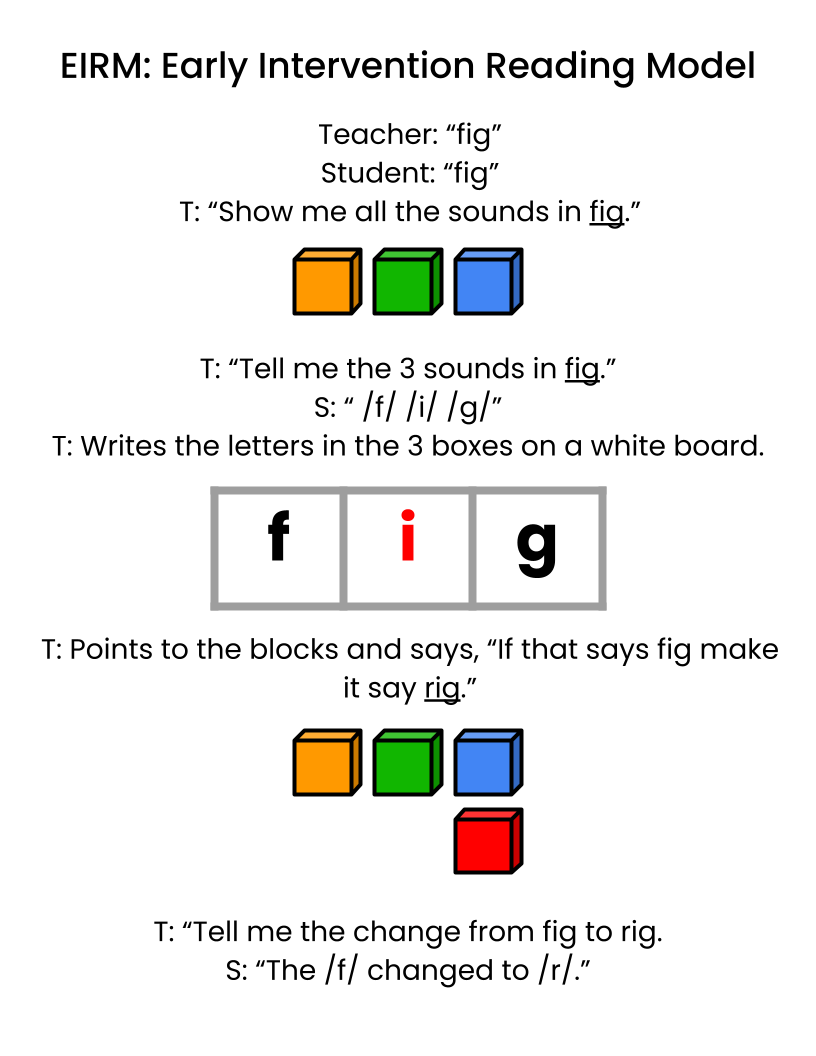
Trained and proficient in Early Intervention Reading Model (EIRM)
Delivered daily, differentiated instruction in ELA, math, writing, science, and social studies aligned with grade-level standards
Planned and implemented differentiated lessons to support diverse learners, including SPED students and English language learners
Led small-group interventions during RTI, providing targeted support for our Tier-3 students
Applied UDL in all instructions through hands-on activities, chants, songs, movement and educational technology
Incorporated positive classroom management strategies and restorative practices
Lead General Education Teacher
Early Childhood Learning Center, IUSD (2018-2025)
Taught virtual classes using Canvas, ClassDojo, and other digital platforms to engage students and provide high-quality instruction
Was trained in and implemented GLAD, Kimochi and HWOT curriculums
Conducted parent zoom workshops and conferences focused on kindergarten readiness and HWOT at home.
Served as a mentor teacher for Irvine Valley College student-teachers
Collaborated with special education team to implement inclusion and assimilation in a general education classroom
Created lesson plans that were age-appropriate and play based learning
Facilitated behavior management conflict resolution
Built strong family partnerships through consistent communication and building trust
Teaching Performance Expectations


TPE 1
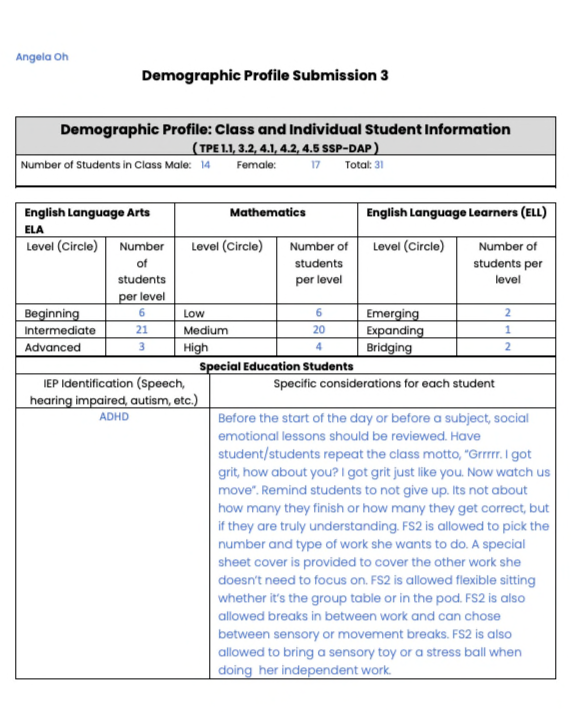
TPE (1.1) Learning about students’ backgrounds, cultures, funds of knowledge, assets, and interests are crucial. This understanding helps teachers build meaningful connections with their students and design engaging lessons that reflect what students enjoy and can relate to. Students must feel safe, accepted, and connected for effective learning to take place. This Demographic Profile assignment highlights the data I collected about my students. Some of the information was gathered from the school database, but most came from getting to know my students. Through daily interactions with students and their families I build a relationship. Building these relationships demonstrates my care for my students and helps establish trust and credibility in the classroom.
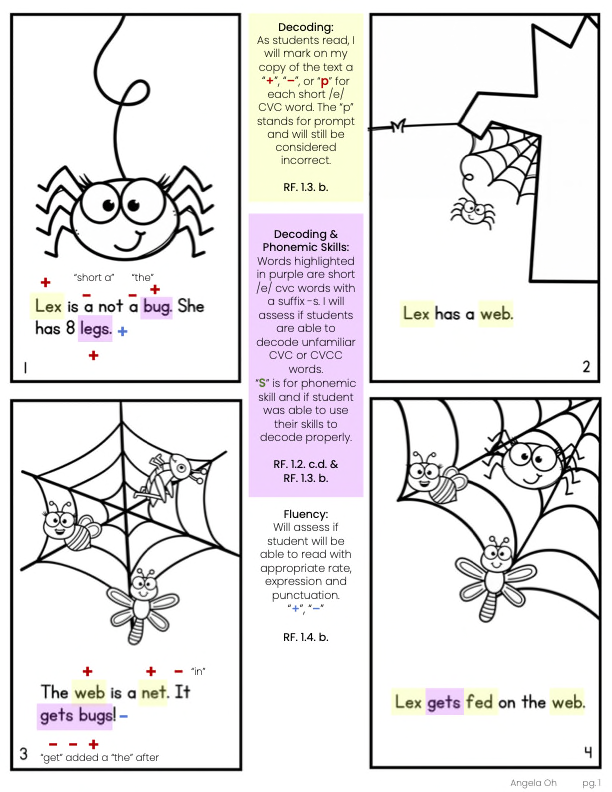
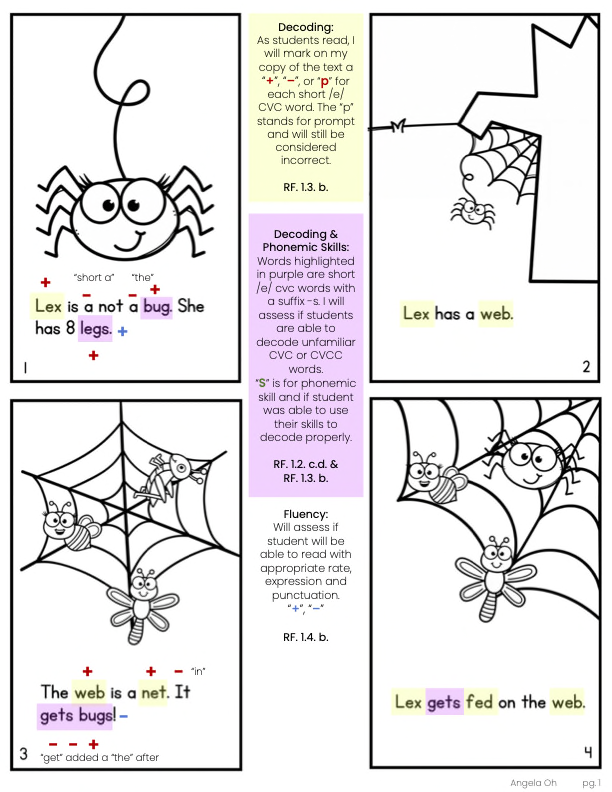
TPE (1.6) During our Response to Instruction (RTI) time, students have been learning about short-vowel CVC words. For their summative assessment, students decoded short /e/ CVC decodable readers about a spider named Lex who built a web. Part of the summative assessment required students to answer reading comprehension questions and a higher-order thinking question about whether it is possible for a spider to have a pet bug. I used the think-pair-share strategy to allow students to discuss whether they believe it is possible for spiders to have a pet. Students used complete sentences and gave one to two reasons to support their opinion. Sentence starters were provided for developing learners. After partner discussions, students participated in a whole-class discussion in which they shared what their peers said and their reasons. During this discussion, students developed their English language skills by practicing active listening and conversational skills.
TPE 2
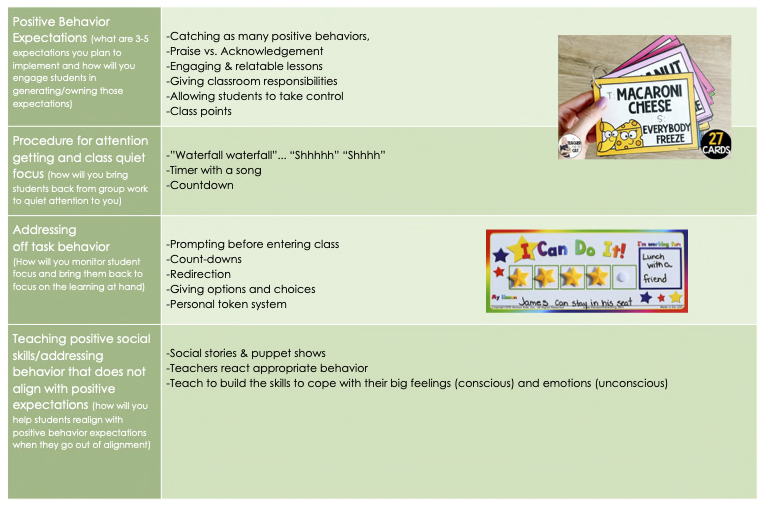
TPE (2.6) Classroom management is one of the most important aspects of a successful classroom. It includes clear behavioral expectations, a positive environment, structured routines, and positive engagement. Through these elements, students feel safe, seen, and connected, which supports their learning. However, I believe that self-reflection and self-care are the foundational keys to effective classroom management. Through my coursework and full-time student teaching, I have learned new things about myself that I would not have discovered without being observed and mentored. These feedbacks reflected not only my teaching practices but also my personal growth. Knowing myself, caring for myself, and recharging myself enables me to better understand, care for, and support others. Being a teacher is not only about teaching students, but helping students, parents, and families navigate through life as I navigate through mine. While positive reinforcement is one of my most effective tools for classroom management, it all begins with me.
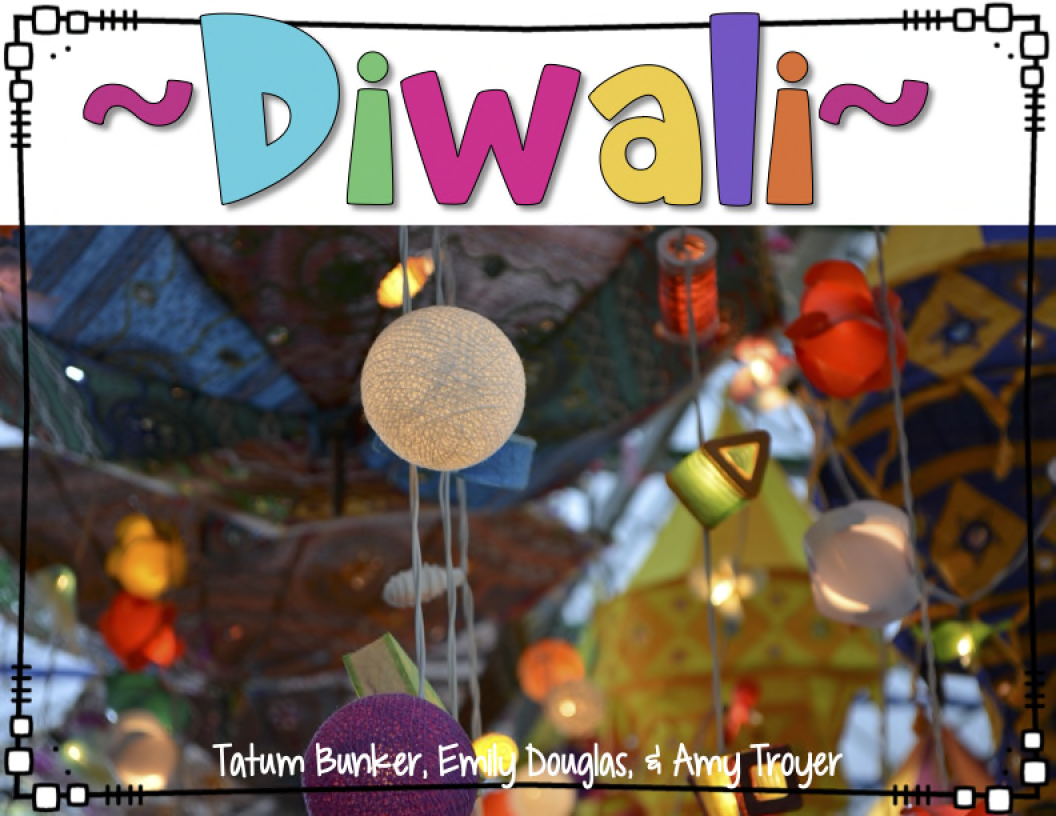
TPE (2.2) In our social studies lessons, students have been learning about holidays celebrated around the world. Students have learned about Las Posadas, Diwali, Kwanzaa, Ramadan, and more. For each holiday, I create presentations, short stories, video clips, or movement activities so that students can learn through multiple means of engagement. Students who celebrate a particular holiday are encouraged to share with the class how they celebrate. I also use think-pair-share (an SDAIE strategy) to have students talk with their peers to find similarities and connections between the holiday they celebrate and the holiday we are learning about. During these lessons, students are reminded to be respectful while peers are speaking by using silent signals. With every lesson, I remind students the beauty of living in America and of our many different cultures and religions. I want students to know that being different, and believing in or celebrating different traditions, is safe and accepted. Even if students do not celebrate a certain holiday, learning about it helps them understand one another and creates a stronger sense of belonging in the classroom. One of the chants I use is, “Different is just different, and that’s okay.” The main focus of these lessons is to promote positive interactions within peers that reflects diversity and are culturally responsive.
TPE 3
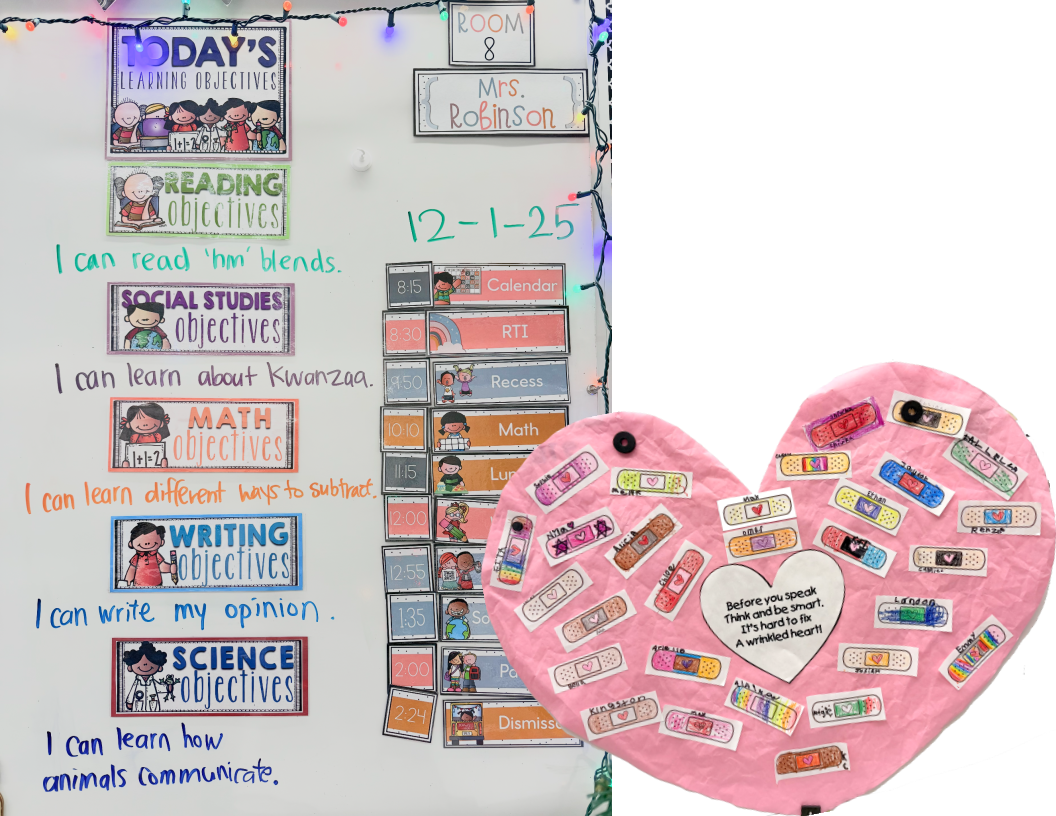
(3.1) The unit learning goals for the week are posted and updated on the board for all subjects, including writing, reading, math, science, social studies, and social-emotional learning. Anyone entering the classroom can clearly see what students are learning that week. These learning goals are based on the California State Standards for each subject, as well as the California English Language Development Standards. The standards are aligned to the grade level being taught, and based on student assessment data, I determine which standards to focus on. During explicit instruction routine, the learning goals are presented to the students, and students repeat the goal aloud. The learning goal is also revisited throughout the lesson. During every instruction and practice, I consistently check for understanding. Based on students’ daily formative data, I determine whether more time is needed on a lesson or if it is appropriate to move forward. Similarly, summative assessments also help me to determine whether I need to reteach or extend the unit lesson.
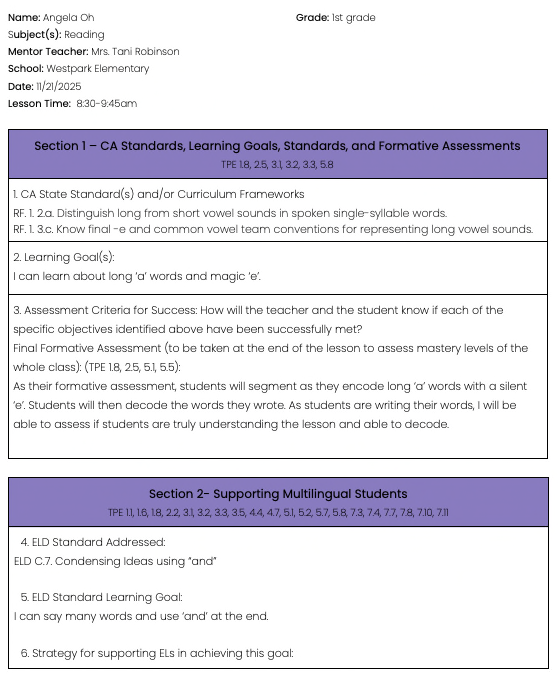
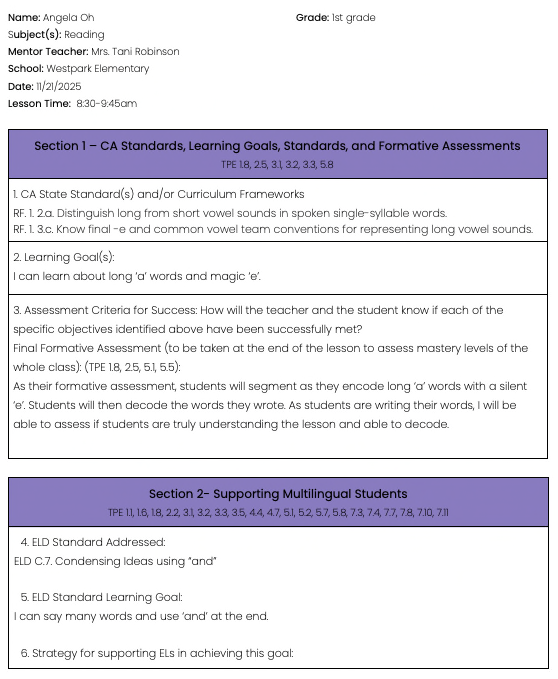
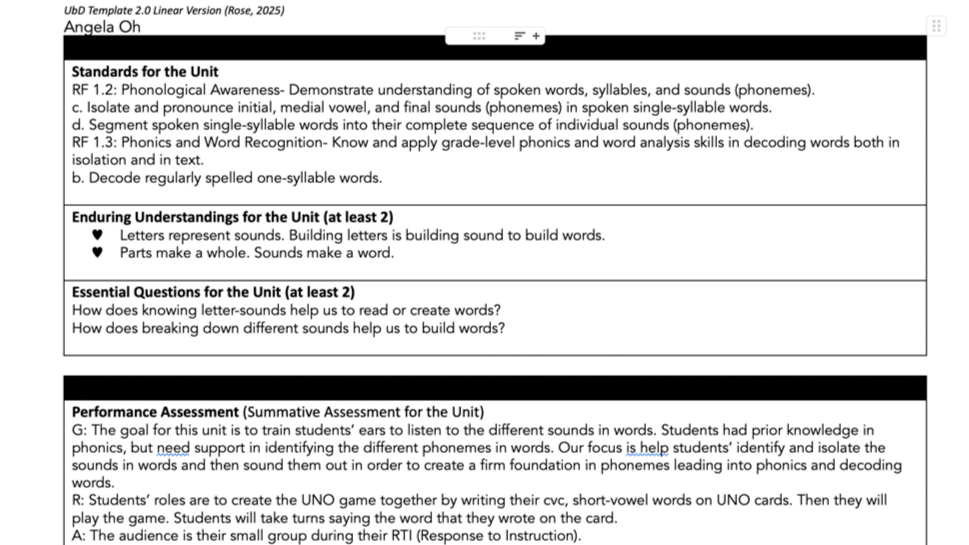
(3.2) Every Tuesday through Friday from 8:25 to 9:45 a.m., we dedicate time to reading instruction called Response to Instruction (RTI). We created homogeneous groups based on students’ mCLASS scores. Within my small groups, I administered the baseline Heggerty assessment to determine what additional support students needed. Analyzing students’ mCLASS and Heggerty assessment scores, I was able to identify specific standards and skills to focus on from CA State Standards. Students’ had funds of knowledge in sight words and phonics knowledge (letter-sound recognition). However, based on their mCLASS and my Heggerity assessments, students needed support in their phonemic awareness and decoding skills. We began our reading unit based on CA Reading Foundational Standards 1.2c, 1.2d, and 1.3b, where students worked on phonemic awareness skills such as isolating sounds, segmenting, and substituting phonemes to decoding long-vowel, magic ‘e’ words.
Students’ learning goals included: “I can say the beginning, middle consonant, middle vowel and final sound,” “I can sound out a word in order,” and “I can read long-vowel, magic ‘e’ words.” I used direct instruction, modeling, guided practice, and independent practice to teach this unit. I incorporated Elkonin boxes, songs, chants, sound-tapping, and gestures to provide multiple means of representation and engagement. Based on students’ differentiated needs, I modified the number of words each group practiced. I also provided flexible seating and movement breaks to support all learners.

TPE 4
(4.4) This lesson took place in a third-grade classroom with a particularly large number of students who had recently immigrated from Russia and Iran. My focus student had recently immigrated from Russia and was still adjusting to the American culture while holding onto his own cultural identity. For this fractions lesson, instead of using a typical pizza to represent a whole, I used ethnic foods such as baklava and blinis. Using culturally relevant foods immediately sparked student engagement and connection. Before beginning the lesson, we held a class discussion about these foods, when they are eaten and how they are traditionally served. Creating word problems based on real-life scenarios also helped strengthen students’ connections and understanding of how fractions apply to their daily lives. Using a visual picture system, students also completed a self-assessment to reflect on how they felt they performed. During this lesson, I also used used songs, chants and movements as multiples means of perception.
(4.5) In my UbD Lesson 2, we incorporated students’ prior learning in isolating sounds into segmenting a short-vowel CVC word in order. During our reading RTI (Response to Instruction) time, the other small-group rotations were at their desks; however, for my focus student, our small-group rotation was held on the floor. This allowed me to provide flexible seating and movement breaks in alignment with his IEP accommodations. Instead of using worksheets, students used whiteboards, Elkonin boxes, sound-tapping, and tangible objects as multiple means of expression. For my developing learners, I also modified the work so it did not feel overwhelming. My focus student’s IEP goals was to speak in complete sentences using four to six words. Our group discussions was on why do we need to learn to read? I implemented think-pair-share and had students discuss this questions with a peer. While implementing ELD A goals, I used sentence starters and visual prompts to support my FS during his conversations. At the end of this Lesson 2, all students were able to segment short-vowel CVC words with ease. I did a quick formative assessment and moved onto phonics, letter-sound recognition.
TPE 5
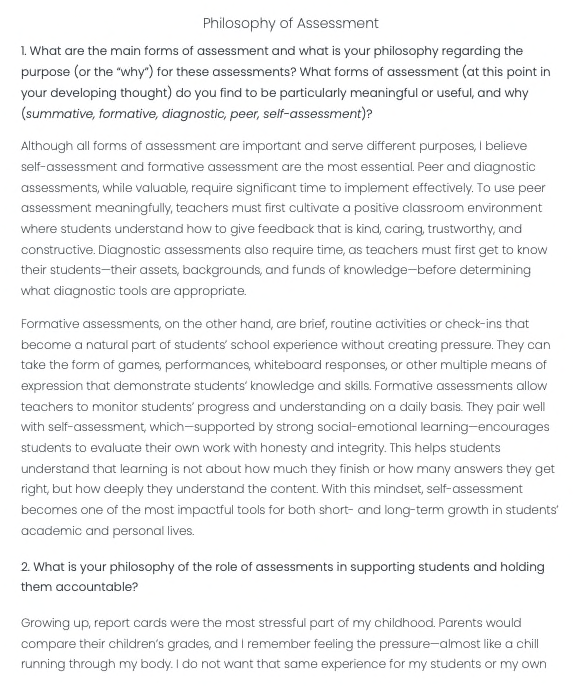
(5.1) My philosophy of assessment centers on using formative and self-assessment to support student learning, confidence, and daily growth. While all assessment types have value, I believe assessments should serve as a reflection on how teachers can better improve themselves and additional support students may need. District and state tests provide important consistency across schools, but they should never define a teacher, a school, or a child. Instead, meaningful learning comes from connection, understanding and engaging instruction, multiple means of expression, perception and even a stronger teacher-student connection. Ultimately, my goal is to ensure students are seen, heard, confident, and supported through diverse and engaging learning experiences.
(5.2) This was a summative assessment on short /e/ CVC words, designed to measure how well students applied both their phonemic awareness and phonics skills. The decodable reader included short /e/ CVC words students had practiced, and unfamiliar short /e/ words to see whether they could apply their skills to new contexts. I also wanted to assess whether students could decode with fluency, which is evident in strong reading comprehension. The results of this assessment helped me identify where students needed additional support or if they were ready for extension lesson. After reviewing the data, we reorganized our small groups into homogeneous groups to target each student’s specific needs.
TPE 6
(6.1) Teaching Pedagogy: In one classroom, there are many different learners with diverse needs and learning styles. Instruction should engage all five senses and even the sixth sense, intuition. Learning is about experiencing, singing, drawing, writing, reading, moving, and even dancing. Popular songs are easy to remember because they are engaging and repetitive, so why not incorporate that into academic learning? The common core subjects can be broken down to share the same learning targets that create connection between all subjects. For example, part–part–whole in math shows how individual sounds form a whole word in reading. Teaching is a creative world, and students learn best using their imagination, bodies, and senses to build stronger connections and deeper understanding.
(6.2) When the right combination of musical notes is played at the right time, it creates harmony. In nature, when animals, rivers, and trees exist where they are meant to be, each fulfilling its role, they form an organic harmony—the circle of life. In the classroom, when the teacher knows who they are, and meant to be in the classroom with those students it creates harmony. When the students feel sense of belonging and know their role in the classroom, harmony grows. Like any beautiful song, harmony takes time, preparation, diligence and practice. When achieved, it becomes something truly beautiful. My mission is to create harmony in the classroom, a place where every student feels they belong, where differences are embraced, victories are celebrated, and the class becomes a family that helps one another grow.
TPE 7
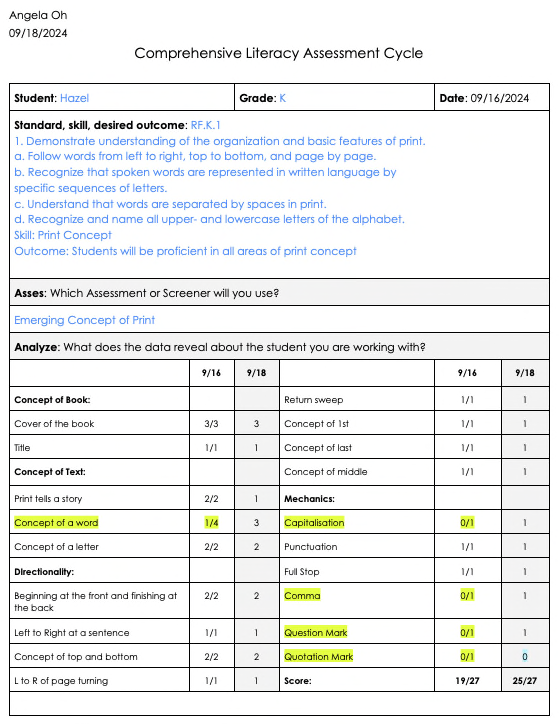
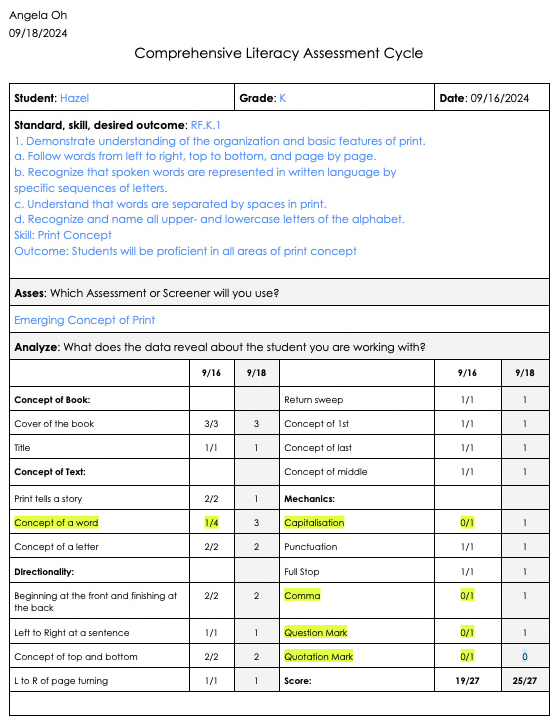
(7.5) This comprehensive literacy assessment cycle was about concept of print. The assessment was done a kindergarten student and their knowledge of print. Student chose a book of their choice and discussed the concept of book, concept of text, reading direction and more. Based on the assessment, we were able to identify the areas where she needed support and determine an appropriate starting point for instruction. After reflecting on the results and providing reteaching, we were able to plan the next steps for further instruction.
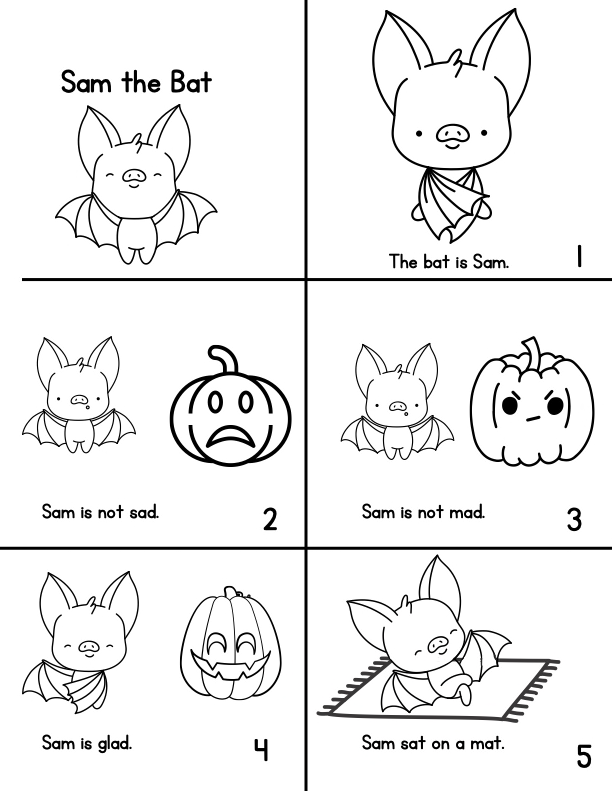
(7.8) In this lesson, students are decoding a short /a/ CVC decodable reader about “Sam the Bat.” The ELD goal is A. Collaborative 1: exchanging information and ideas with others through oral collaborative conversations on a range of social and academic topics (SL.1.1, 6; L.1.1, 6). Students have been learning about bats in science and have funds of knowledge on this topic. After reading “Sam the Bat,” students will use their reading comprehension skills and funds of knowledge to form an opinion about what kind of bat Sam is. They will discuss with an elbow partner using complete sentences and providing one to two reasons. Afterwards, students will share what their partner said. Sentence starters will be available for developing learners and English language learners, such as: “I think Sam is a…,” and “Sam is a… because…”.
All About me

I am a mother of two children and one angel. I graduated from San Francisco State University with a B.A. in Psychology. Right out of college, I worked as a behavioral therapist, providing services to children diagnosed with autism. After a few years, I moved to Korea, where I worked as a preschool English teacher, a voice actress, and volunteered at clinics supporting children with autism and special needs. In November 2012, I returned home and planned to further my education in psychology when my mentor asked me what I saw myself doing every day. My reply was, “I just want to play with children.” That comment was the moment that sparked my journey into education.
One door opened after another, and I found myself working as a general education teacher at Early Childhood Learning Center in Irvine. After seven years, I wanted to continue growing and find new ways to improve myself as a teacher. With the encouragement of my principal and the support of my family, I began my journey toward becoming a credentialed teacher. What makes me unique is how my past, my community, my present, and my future have opened my heart, and broadened my embrace. Through my life’s journey, I have discovered that my greatest passion and purpose is people.
Contact me
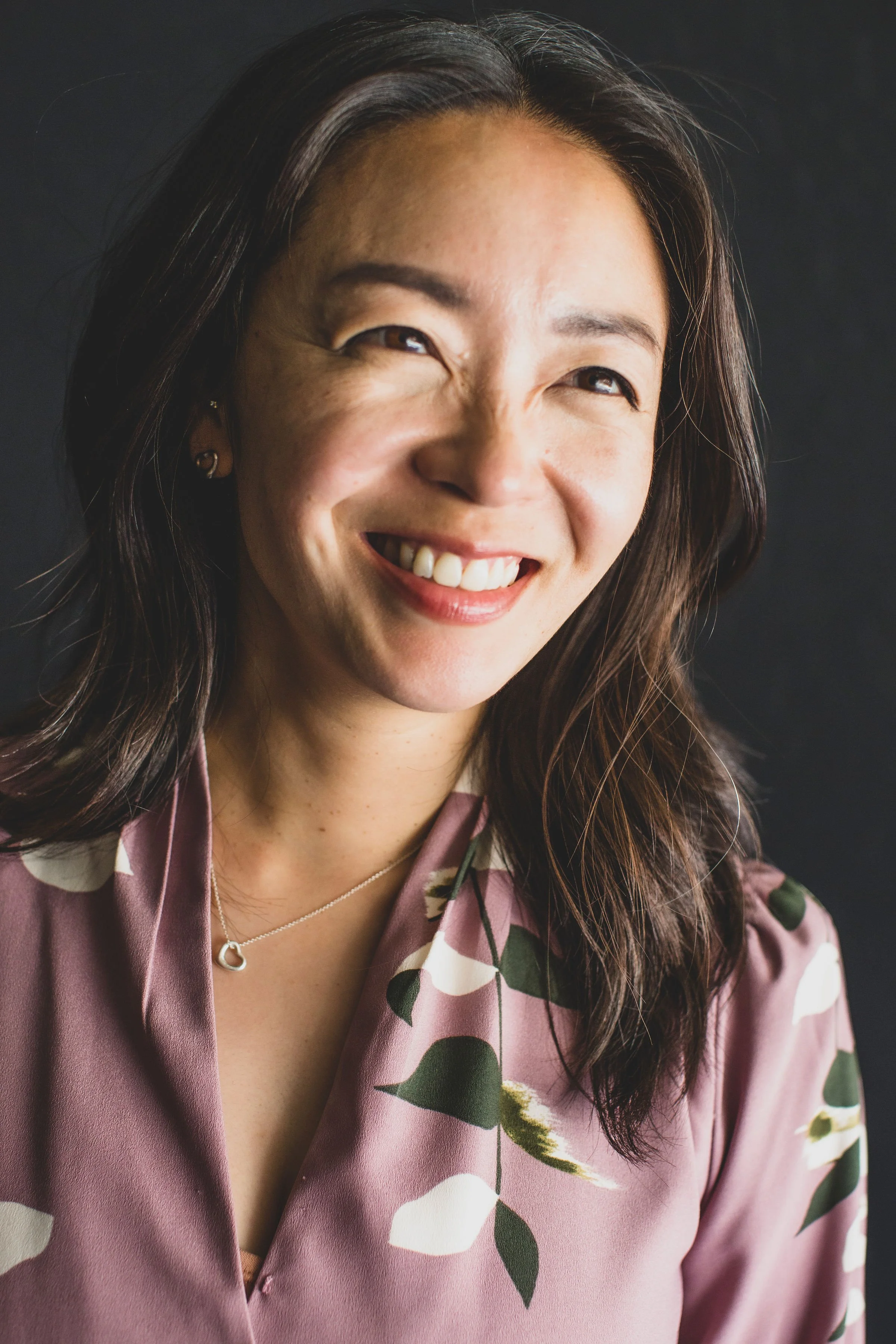
I’d be excited to connect about teaching opportunities at your school—feel free to contact me.
PERSONAL: akimmira@gmail.com
WORK: AngelaOh@iusd.org